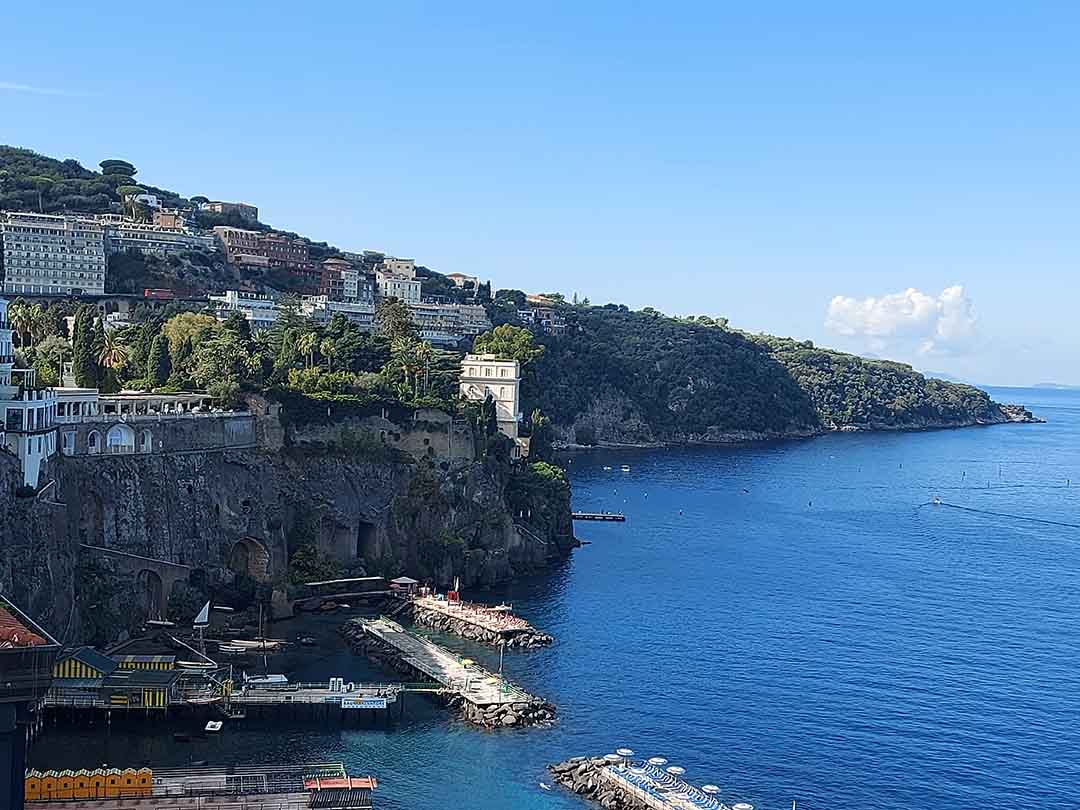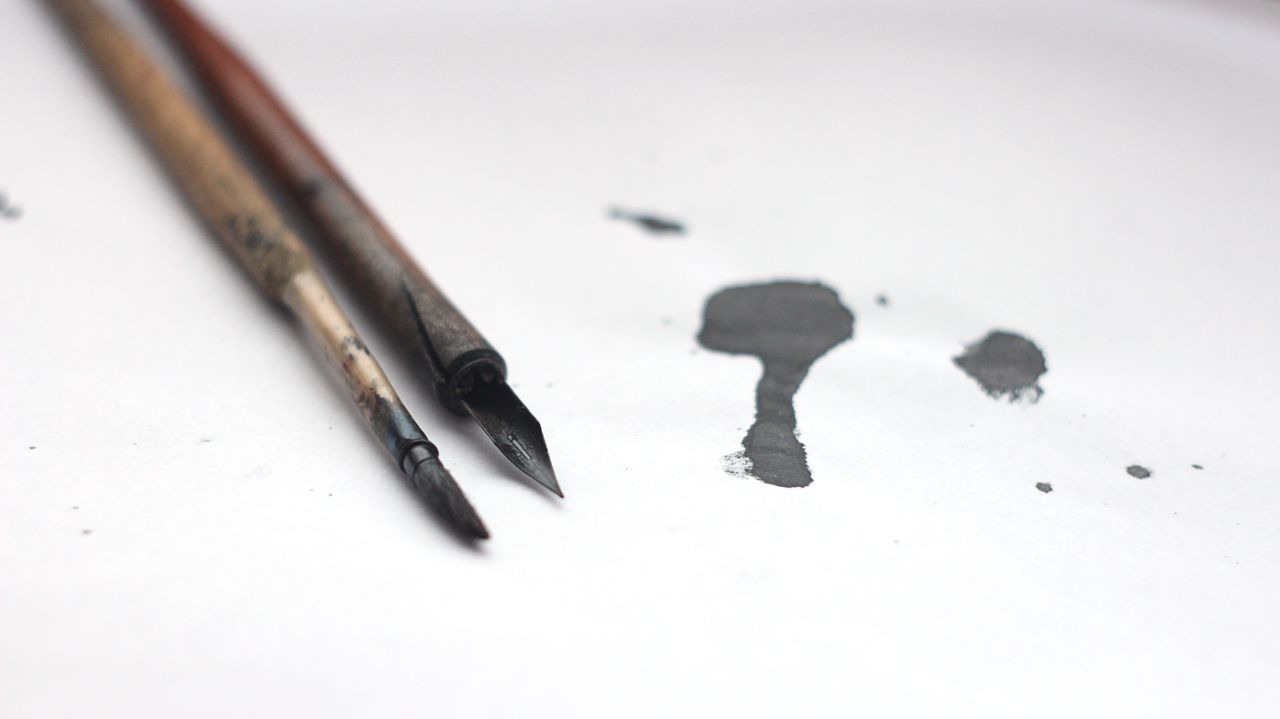
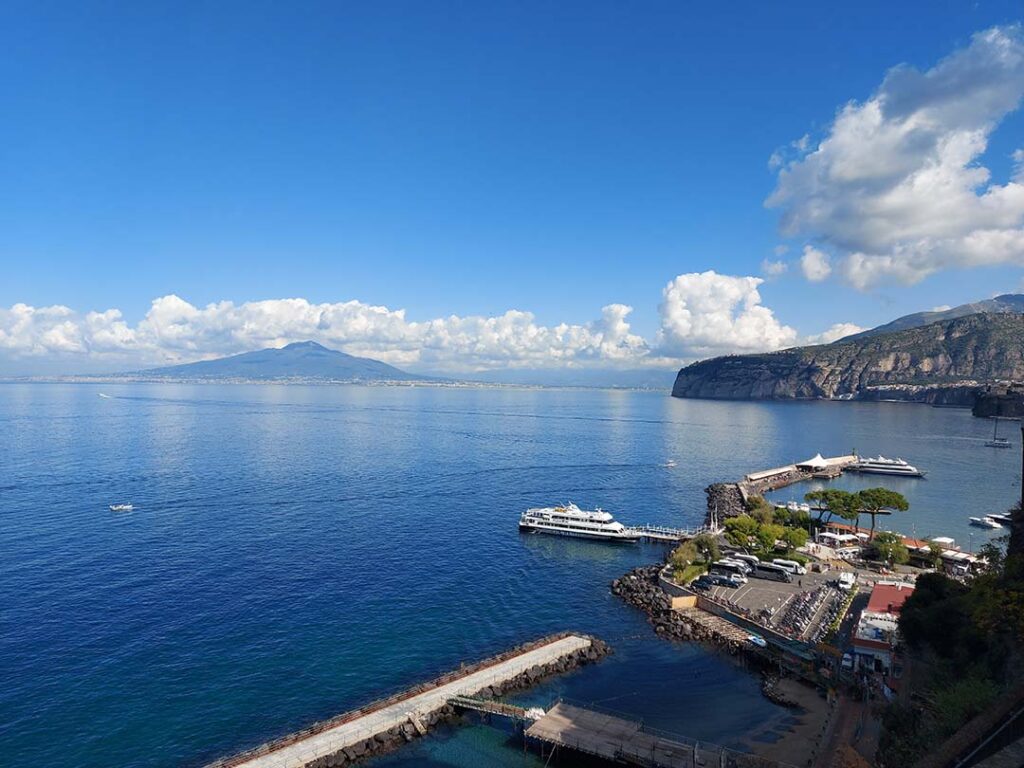
This trip to Italy was my first time traveling with a watercolor kit and it changed the way I sketch. A tiny palette, one travel brush, a fountain pen, and a pocket sketchbook fit in the smallest corner of my bag. The big win with watercolors on the go: you don’t need many colors, setup is instant, and the footprint is minimal. In four cities I captured six scenes—two in Rome, one in Amalfi, two in Sorrento, and one in Positano—surrounded by Amalfi-coast views, lemons everywhere, and an easy, friendly atmosphere.
Btw, if you planning your visit to Prague I can recommend some hidden gems! Read about them in my recent post.
Roman Forum
My vacation started in Rome. I visited Colosseum, Roman forum and Palatine Hill. I found a quiet bench facing the Basilica di Santa Francesca Romana and enjoyed the rare silence in the Forum’s bustle. Fountain-pen lines shaped the baroque scrolls and statues before a soft wash slipped into the shadows. The church began in the 900s as Santa Maria Nova, later rededicated to Frances of Rome after her canonization in 1608. Which is why Romans still bring their cars to be blessed on her feast day she’s the patron saint of drivers.
If you’re looking for tickets to Colosseum and other attractions, find them here.


Aqueduct Park in Rome
It’s great to visit there on sunset, make a picnic or just walk around ancient remaining of aqueducts. I floated warm sky washes first and pinned them with a few decisive darks. The park sits along the Via Appia Antica, where as many as eleven aqueducts once fed Rome. Aqua Claudia alone ran nearly 70 kilometers and was completed under Emperor Claudius in 52 CE. The place is also a favorite backdrop for filmmakers and picnickers alike.


Quiet Street of Amalfi
The main street of Amalfi is a river of visitors, but one turn right delivered a pocket of calm: a ceramics wall glowing with color, wire baskets of lemons, and café stools waiting like punctuation marks. While our food was on its way, I sketched fast cool shadows, warm façades, and tiny pops of yellow to lead the eye. Amalfi once ruled the seas as one of Italy’s early maritime republics, trading with Byzantium and the Arab world. Its merchants helped spread innovations like paper, which evolved here into the handmade bambagina (paper) still prized today.
Tip: An easy, quick way to get from Rome to Sorrento or the Amalfi Coast is to take an Italo high-speed train from Rome to Naples, then transfer to a local train or bus to your final stop. Italo often offers discounts and promo codes, so check for deals before you book. All about this you can find here.


Canottieri Italia in Sorrento
I stood barefoot on the sand, let my legs dry after the sea, and drew the yellow building with red shutters and umbrellas. Sorrento sits on soft tufa cliffs and has attracted travelers for centuries, including the poet Torquato Tasso. The city is known for fine wood inlay called intarsia, a craft that still appears in local shops and furniture. Rowing and seaside clubs keep long traditions alive, so the shoreline feels like a living room for the town. My sketch used a few quick lines and simple washes to match that easy beach rhythm.


Sorrento Church Servi di Maria
This small Servite church stands just steps from the Cathedral and locals call it the “Congregazionella.”
It was built in the 1700s and has a distinctive octagonal bell tower that reads clearly in ink. Inside, people venerate an 18th century “Dead Christ” sculpture that leads a quiet Good Friday procession every year. The Servite order began in medieval Florence and focuses on service and reflection, which suits this intimate space. I kept the palette simple warm stone, cool sky so the structure and setting could do most of the talking.


The Cathedral of Positano
From a terrace I framed the façade and bell tower against the hillside and the Tyrrhenian Sea. The church is famous for its majolica tiled dome and a 12th-century Byzantine Black Madonna icon. A local legend says sailors heard “posa, posa” (“set me down”), brought the icon ashore, and the town took its name. The site was once tied to the Benedictines, linking this small place to a wide European network. I kept the steps, portals, and sky light and clear, letting the sea finish the composition.


Italy rewarded every pause: statues over rooftops in Rome, lemon-scented lanes in Amalfi, sunlit façades in Sorrento, and the postcard geometry of Positano. Traveling light with a tiny watercolor kit let me say “yes” to more moments and more pages. I’m officially hooked on the small kit life. Next trip, same setup, new views (and probably more lemons).