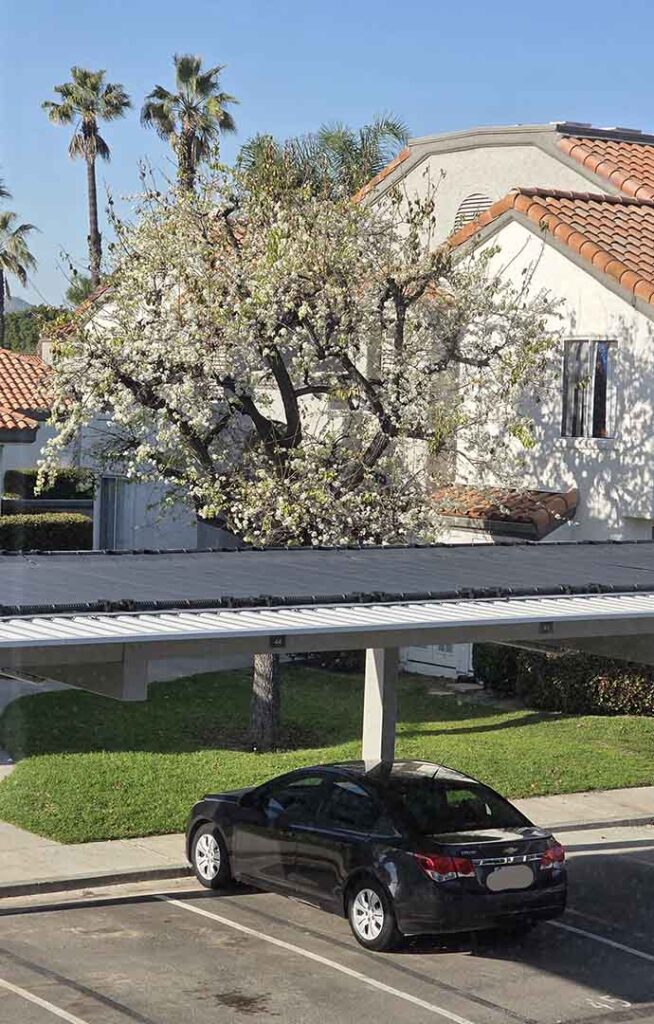
Some moments outside your window last only a few days, and that is exactly why I love sketching them fast. This blooming tree was doing its best show and I knew it would disappear soon, so I grabbed toned paper and markers. Toned paper gives you a built in mid tone, so you can jump straight into highlights and shadows without overthinking. This is a simple, repeatable way to turn an everyday view into a finished sketch that feels alive.
If you interested to sketch a night scene on toned paper I have a tutorial about it here.
My acrylic markers set you can find here.
Quick sketch
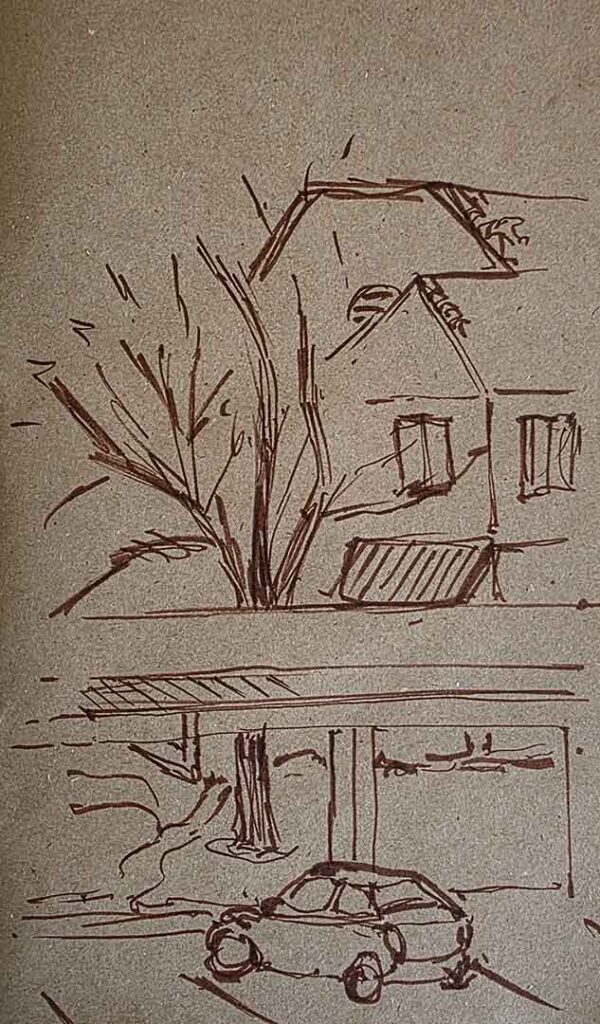
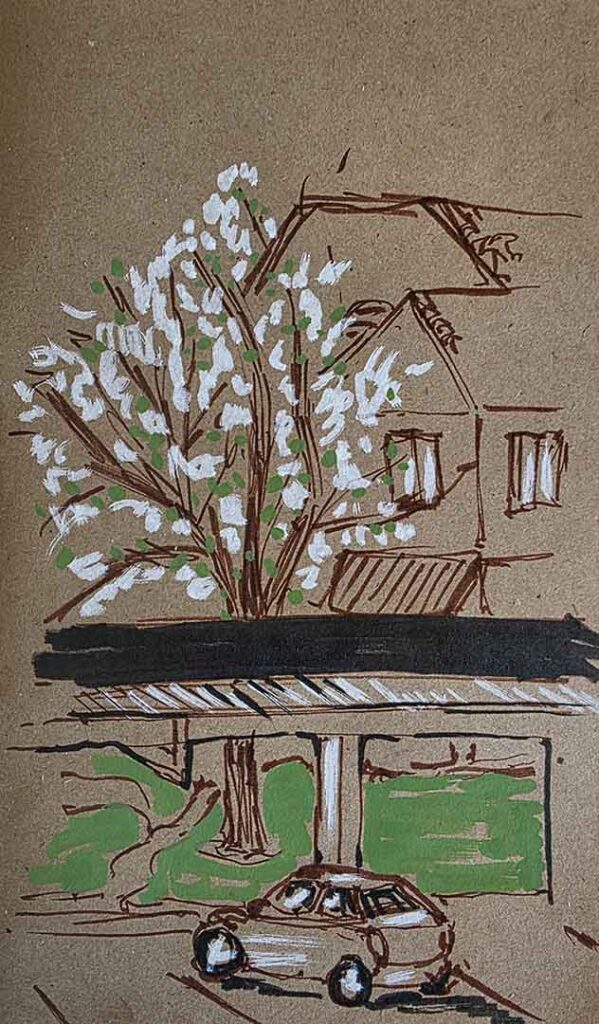
Start with a quick sketch and focus on essentials only, not perfection. I blocked the big shapes first: the tree mass, the roofline, the house, and the carport. Then I added just enough lines to suggest windows, the car, and the main branches. Keep your lines light and confident, and let the toned paper do some of the work for you. The goal is to place everything correctly so the later layers feel easy and fun.
Flowers and highlights
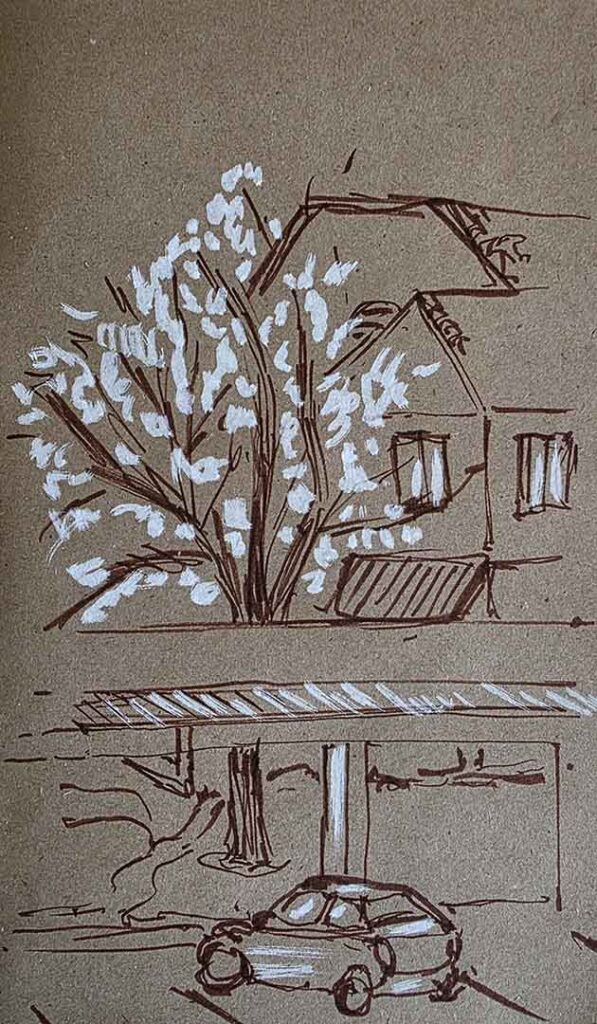
Now bring the scene to life with flowers and highlights using a white acrylic marker. I dotted and flicked white marks across the tree to suggest clusters of blossoms, leaving small gaps so it stays airy. Then I added highlights on the carport roof, the car body, and the windows to show sunlight hitting reflective surfaces. On toned paper, white instantly looks like light, so even a few strokes create sparkle. This step is also where the sketch starts to feel like spring, not just a line drawing.
Greenery
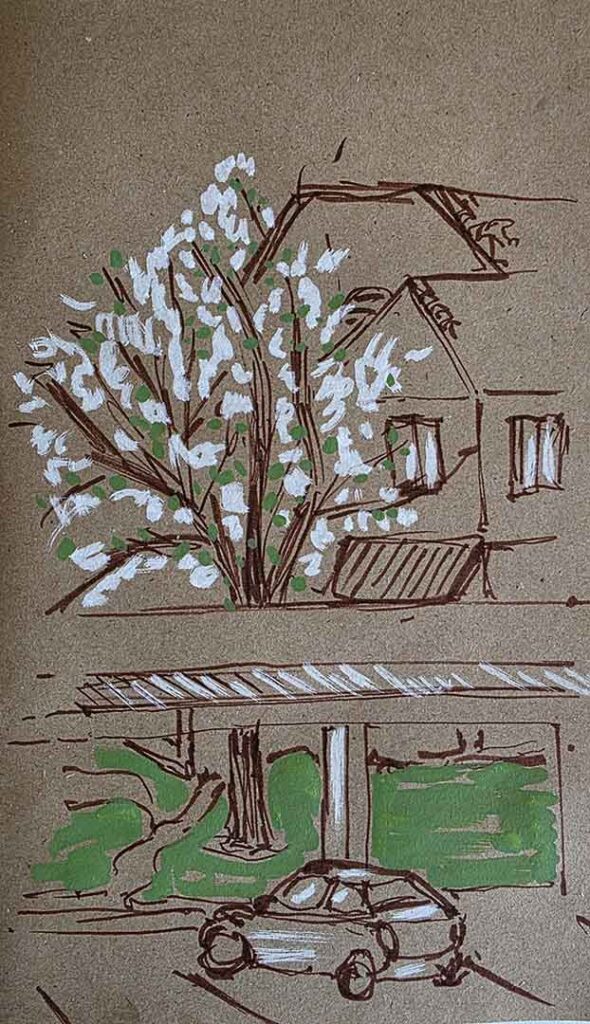
Next, I used a green acrylic marker to add the greenery and balance all that white. I colored the grass in simple blocks, letting the marker texture show through so it looks natural. Then I added small green leaf dots around and between the blossoms to break up the white clusters. This contrast makes the flowers look brighter and gives the tree depth without heavy shading. You do not need to paint every leaf, just suggest them where the eye needs variety.
Dark objects
This is the step that adds structure and contrast, and it takes the sketch from soft to bold. I used a black acrylic marker to fill part of the carport roof, creating a strong dark shape that anchors the whole composition. Then I added small black details like the car tires, a few lines, and deeper accents in shadow areas. Dark values make your highlights pop, especially on toned paper. Use black in controlled areas so it feels intentional, not heavy.
Shadows and final touches
Finish by unifying everything with shadows using a grey marker. I marked shadows on the house, grass, and car to show where light falls and where forms turn away. Then I darkened the windows a bit more and added texture to the roof so the house feels solid behind the tree. This is also the moment to clean up edges, strengthen a few lines, and add any missing tiny accents. Keep it light and selective because the goal is freshness, not overworking.
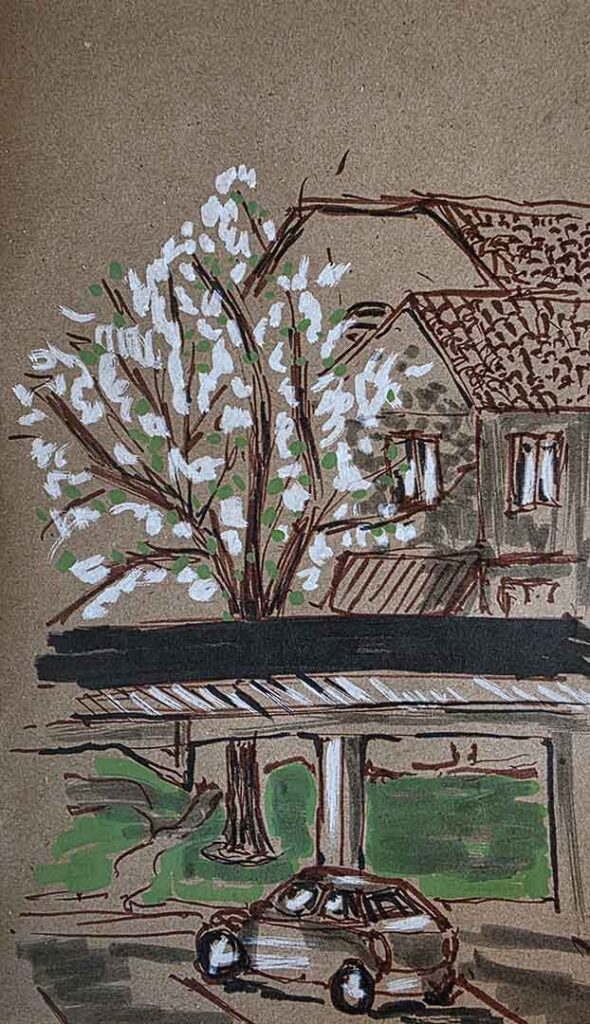
That is it, a full spring scene in five simple layers, straight from a window view and done before the bloom vanished. Toned paper makes this process fast because the middle value is already there, so your whites and darks feel dramatic with minimal effort. If you want to try it, keep a small toned sketchbook and two markers ready, white plus one shadow tone, and you can sketch any quick seasonal moment.