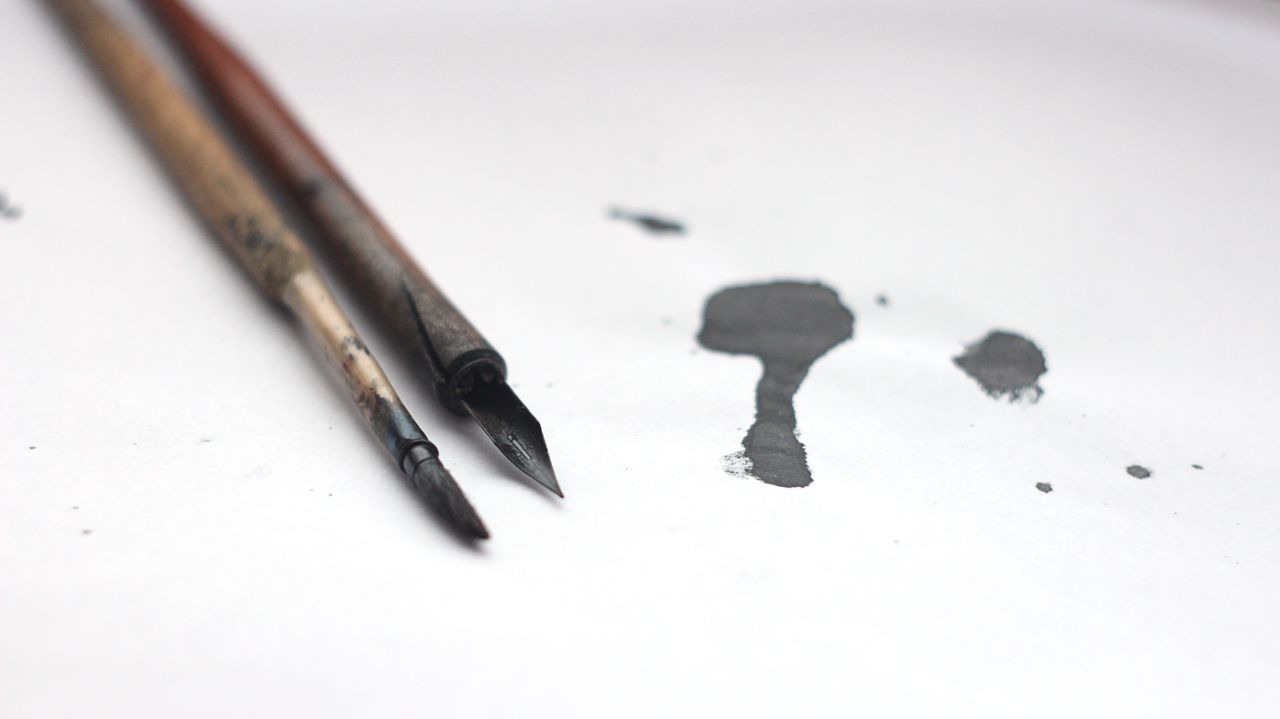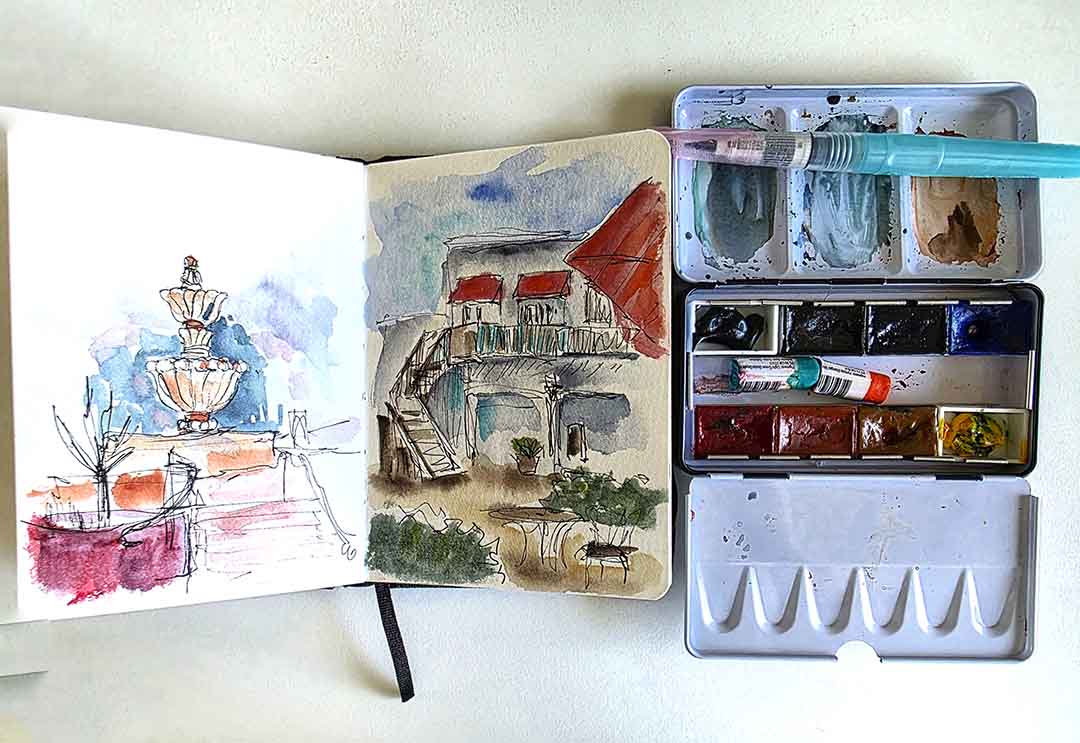
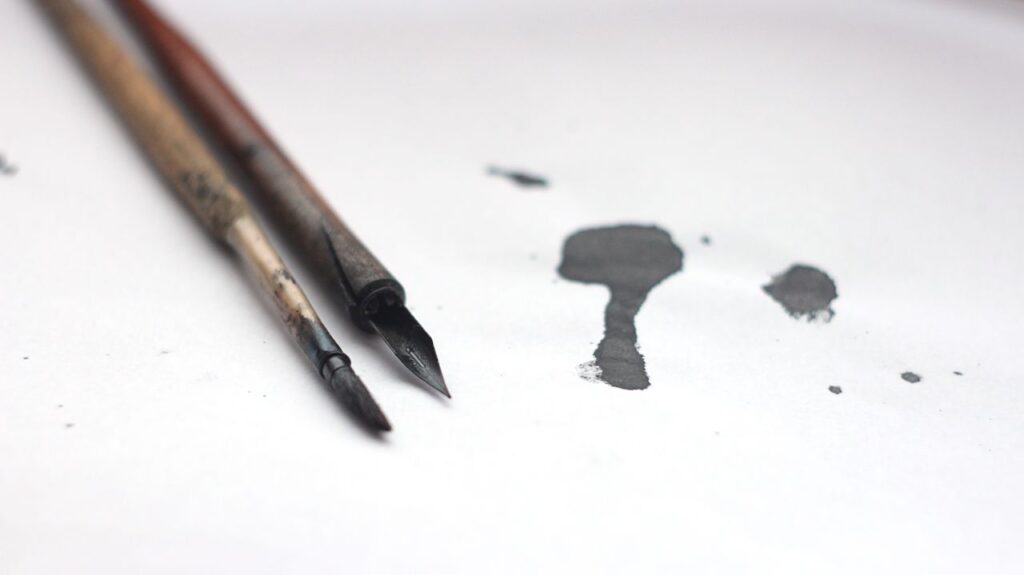
Inktober is coming soon, and this year I want to approach it a little differently. Usually I stay quite close to the classic black ink on white paper, with lines and hatching. For Inktober 2026, I want to experiment more with mixed media, washes, textures, and different values. I am also adding grey into my palette, so instead of working only between black and white, I can use the paper itself as a natural mid-tone.
If you’re looking for more traditional supplies this post is for you.
More about Inktober like the prompt list and other information you can find on the official site.
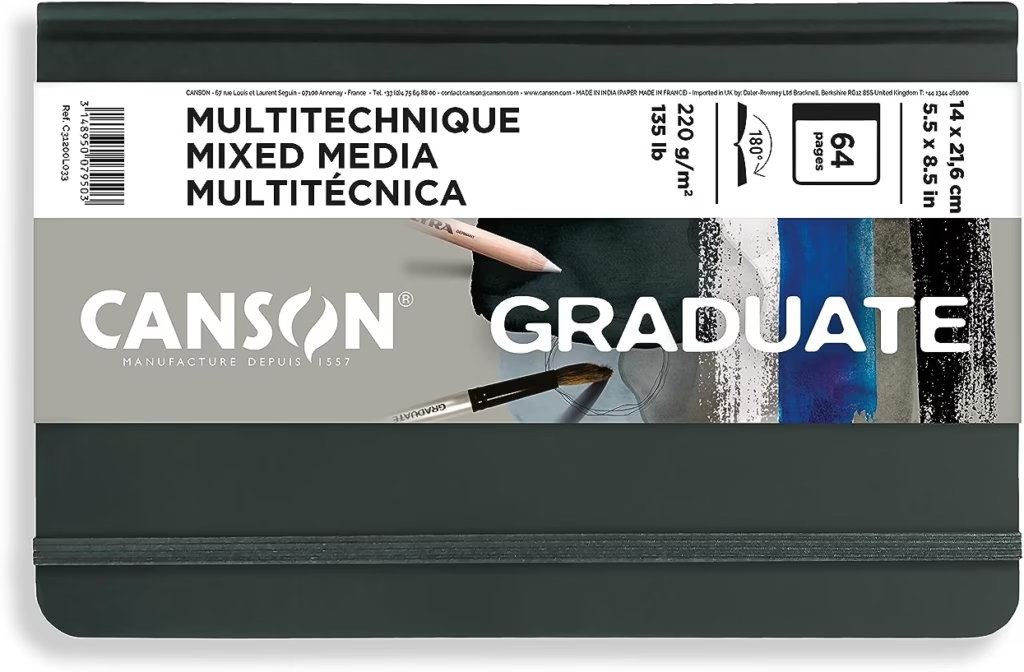
Canson Sketchbook
Usually I draw my Inktober sketches on white paper, but this time I wanted something different. I know grey paper is not the most traditional choice for Inktober, but that is exactly why I want to try it. The grey surface will already give me a middle value between the darkest blacks and brightest whites, which should make experimenting with light and shadow more interesting. I also think the combination of grey paper, black washes, and white highlights can make the final sketches feel richer than simple black ink on white paper.
Pens and Brush Pens
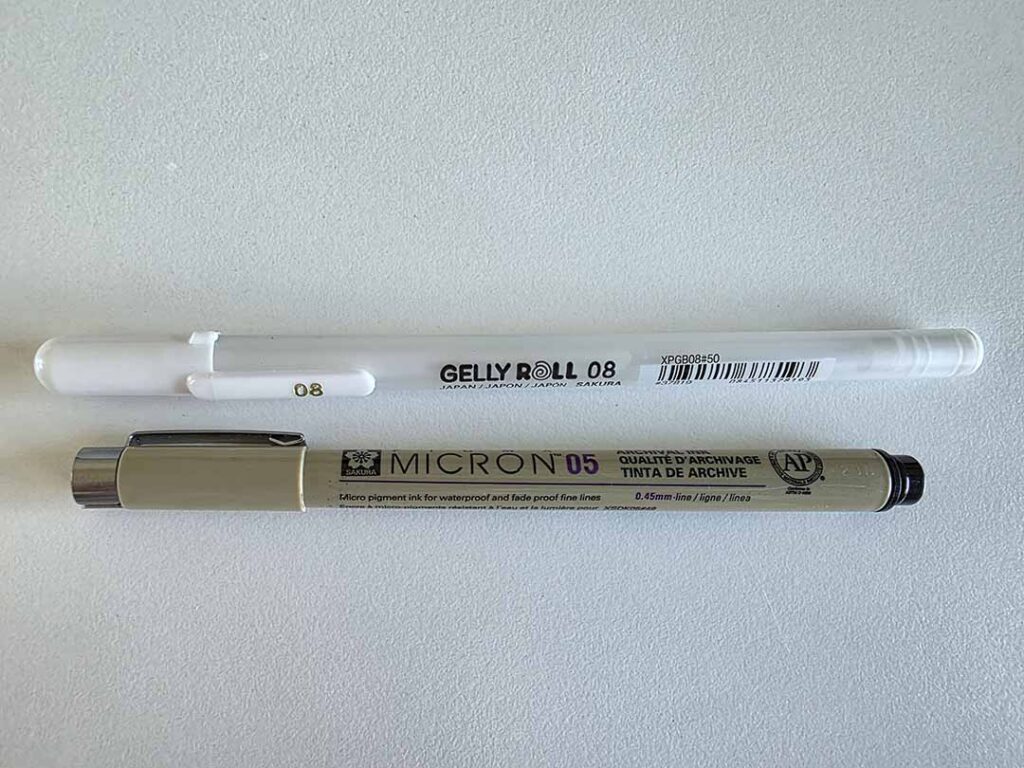
For line work and some hatching, I will still use my Micron pens because they are reliable and I have several different tip sizes. Having different thicknesses makes it easy to move between tiny details, outlines, and stronger foreground lines. I also want to experiment with a black Pentel Sign Brush Pen because its flexible tip can create both thin and thick strokes, which should help me make the drawings feel looser. For highlights, I will use a white Sakura Gelly Roll, and I am especially curious to see how well it works on the grey Canson paper.
Acrylic Markers
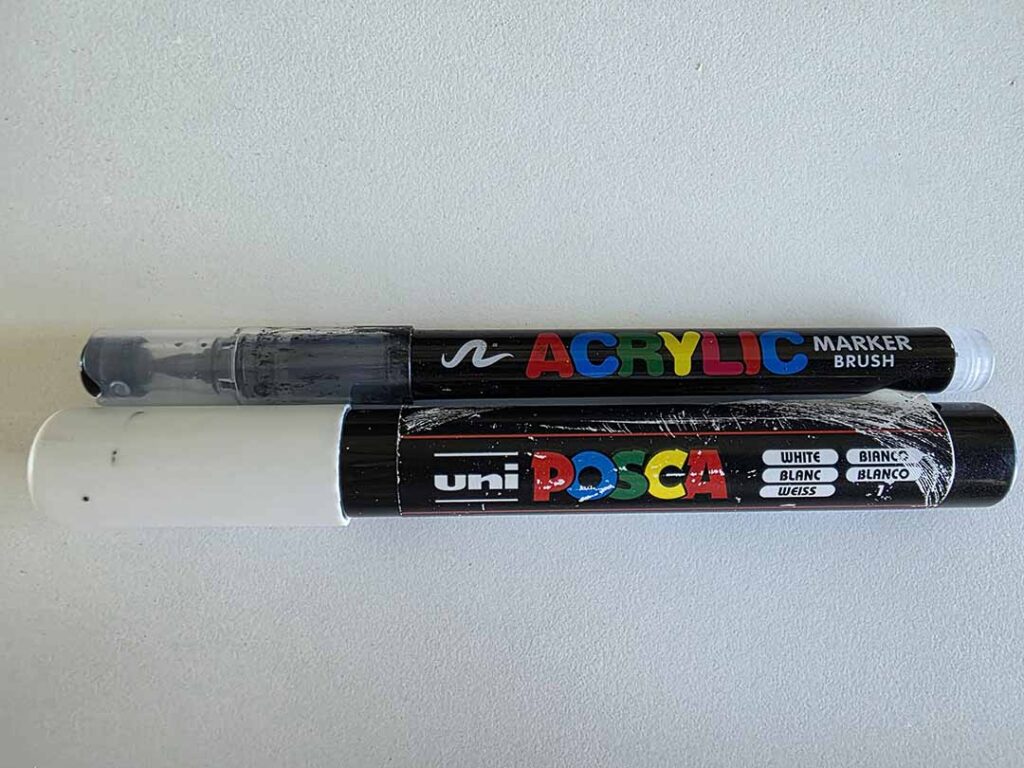
Acrylic markers will be my choice when I need to cover larger areas with solid black or white. I have a white Posca marker and a black acrylic marker, and both work very well for creating strong opaque shapes. Instead of spending a lot of time filling dark areas with hatching, I can simply block them in and create much stronger contrast. I think they will also work nicely together with the grey paper, especially when I want bright white highlights or deep black areas to immediately stand out.
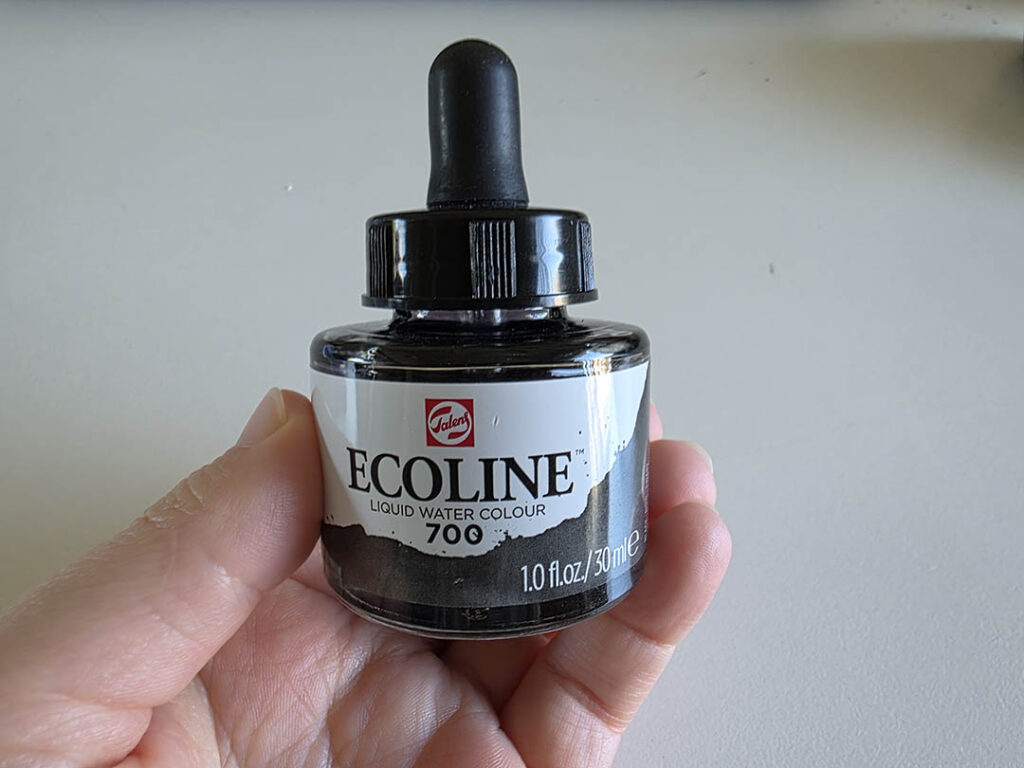
Ecoline Liquid Watercolor
This year I also want to use black Ecoline liquid watercolor instead of traditional ink for some of my washes. I plan to use it for larger areas, but what interests me most is the possibility of creating many different shades from one black color. By changing the amount of water, I can move from very transparent grey washes to much darker and more opaque areas. I hope this technique will help me create more depth while using fewer hatch lines and giving the sketches a softer, more painterly feeling.
Black and White Pencils
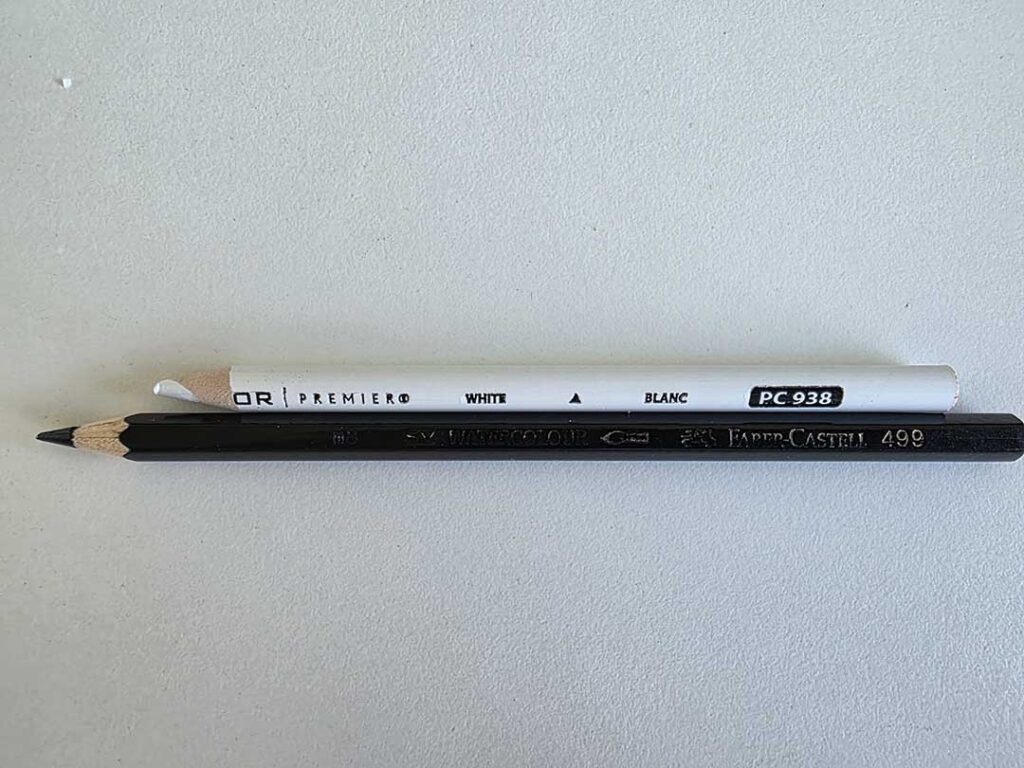
My final supplies are a white Prismacolor pencil and a black Faber-Castell watercolor pencil. I want to use the white pencil mainly for highlights, reflections, and small glass effects where a marker might feel too strong. The black watercolor pencil will be useful for softer and more delicate areas, and I can also activate it with a wet brush whenever I want the lines to turn into a subtle wash. I am not completely sure yet how much I will use these pencils, but that is part of the experiment and exactly what makes this Inktober setup interesting to me.
This year’s Inktober will be less about following one strict technique and more about experimenting with materials. I want to combine ink lines, grey paper, transparent washes, opaque markers, brush strokes, and pencil textures while keeping the palette mostly monochrome. My goal is to use less hatching, explore more washes, and see how many different effects I can create with black, white, and grey.